
If your home relies on a septic system, what goes down your kitchen sink matters more than you might think. Every time you wash greasy pans, rinse cooking oil, or scrape food scraps into the sink, fats, oils, and grease (FOG) travel through your plumbing. Over time, these substances can build up inside pipes, clog your septic system, and lead to expensive repairs.
One of the most effective ways to reduce these problems is by installing under sink grease traps. While grease traps are often associated with commercial kitchens and restaurants, they can also be valuable for residential properties, especially homes that cook frequently or have older septic systems.
Combined with proper grease trap maintenance, these devices help protect your plumbing, improve septic system performance, and extend the lifespan of your entire wastewater system.
In this guide, we’ll explain how under sink grease traps work, why they’re important, and what homeowners should know about grease trap installation and maintenance.
What Are Under Sink Grease Traps?
Under sink grease traps are compact plumbing devices installed beneath a kitchen sink. Their purpose is simple: capture fats, oils, and grease before they enter your home’s drainage system.
Instead of allowing grease to flow directly into your septic tank, the trap slows the wastewater down. Because grease is lighter than water, it rises to the surface while heavier food particles settle at the bottom. Cleaner water then flows through the outlet and into your septic system.
This simple process helps prevent grease from coating your pipes or accumulating inside your septic tank.
Main Components of an Under Sink Grease Trap
Most residential grease traps include:
- An inlet pipe that receives wastewater from the sink
- Internal baffles that slow the flow of water
- A chamber where grease separates from water
- An outlet pipe that sends treated wastewater to the septic system
- A removable lid for cleaning and inspections
Image suggestion: Cross-sectional diagram showing how an under sink grease trap separates grease, solids, and water.
How Do Under Sink Grease Traps Work?
The effectiveness of under sink grease traps comes from a simple scientific principle: fats, oils, and grease float on water.
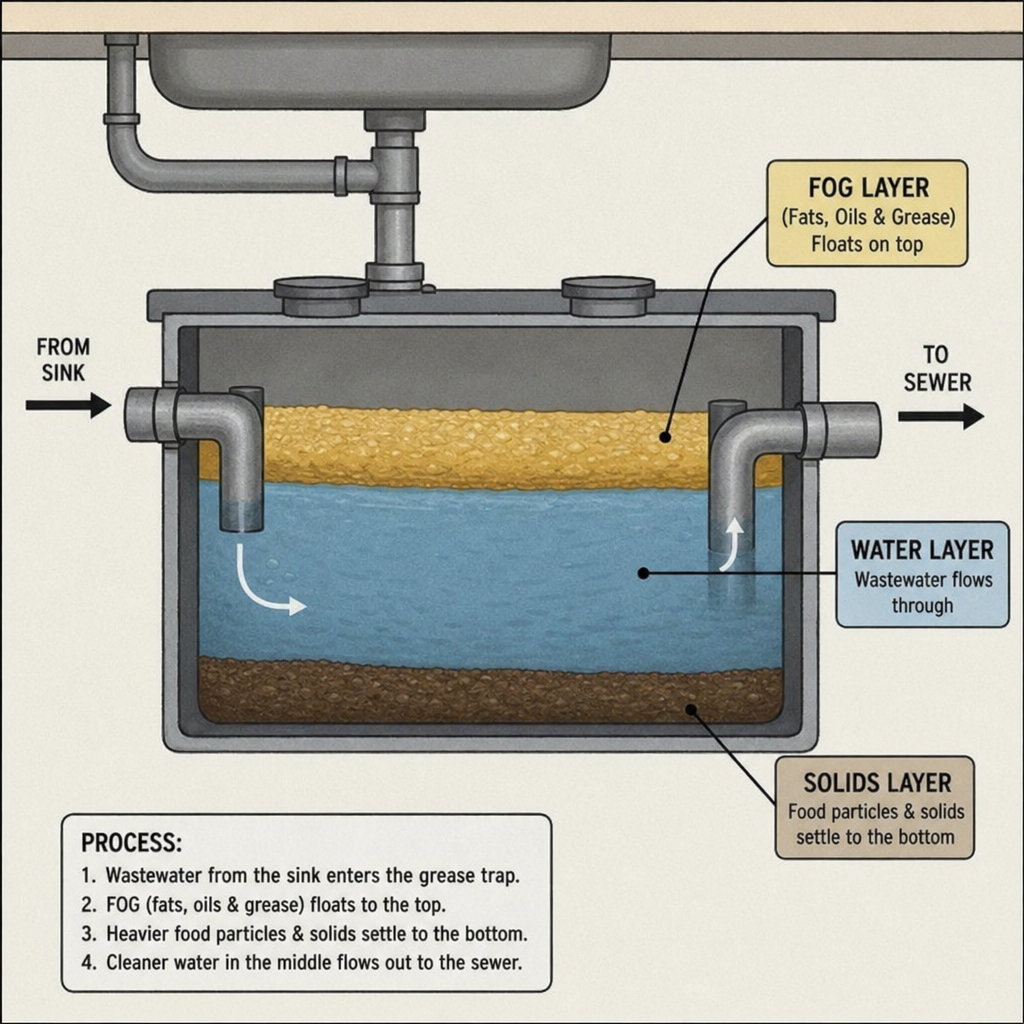
Here’s what happens every time wastewater enters the trap:
Step 1: Wastewater Enters
Water carrying grease and food particles flows into the grease trap from the kitchen sink.
Step 2: Flow Slows Down
The internal baffles reduce the speed of the water, allowing materials to separate naturally.
Step 3: Grease Separates
Grease rises to the top while food particles and heavier debris sink to the bottom.
Step 4: Cleaner Water Exits
Only the water from the middle layer continues through the outlet pipe toward your septic system.
Without a grease trap, grease continues through the plumbing where it can cool, harden, and create stubborn blockages.
Why Under Sink Grease Traps Matter for Septic Systems
Many homeowners don’t realise that grease is one of the leading causes of septic system problems.
Unlike wastewater, grease doesn’t easily break down inside a septic tank. Instead, it accumulates over time, reducing the tank’s efficiency and increasing the likelihood of expensive repairs.
Installing under sink grease traps provides several important benefits.
Prevents Plumbing Clogs
Grease sticks to the inside of drain pipes, gradually narrowing the passage for wastewater.
Capturing grease before it enters the plumbing significantly reduces the chance of blockages and slow drains.
Protects Your Septic Tank
When excessive grease enters a septic tank, it forms thick layers that interfere with natural bacterial activity.
This reduces the system’s ability to separate solids and treat wastewater properly.
Extends Drain Field Life
Grease that escapes the septic tank can eventually reach the drain field.
Over time, this may clog soil pores and reduce the drain field’s ability to absorb wastewater.
Replacing a failed drain field is far more expensive than preventing grease buildup in the first place.
Reduces Septic Pumping Frequency
Although regular pumping is still necessary, reducing grease entering the tank helps maintain healthier conditions inside the system.
This supports more efficient operation between service appointments.
Image suggestion: Illustration showing grease buildup inside plumbing pipes compared with a clean pipe protected by a grease trap.
Signs Your Kitchen Could Benefit from a Grease Trap
Not every home requires a grease trap, but some households can benefit significantly from one.
You may want to consider grease trap installation if:
- You cook large meals regularly.
- You frequently use oils or deep fry foods.
- Your drains clog often.
- Your kitchen sink drains slowly.
- You notice recurring grease buildup in plumbing.
- Your septic system has experienced previous blockages.
Even if your plumbing appears to function normally, installing a grease trap can help prevent future problems before they become costly repairs.
Grease Trap Installation: DIY or Professional?
Some homeowners consider installing a grease trap themselves. While smaller residential units can sometimes be installed as a DIY project, professional grease trap installation is usually the better option.
A licensed professional will:
- Select the correct grease trap size
- Ensure proper pipe connections
- Verify compliance with local plumbing regulations
- Check that wastewater flows correctly
- Test the system after installation
Professional installation also helps prevent leaks and improper drainage that could reduce the grease trap’s effectiveness.
For homeowners with septic systems, investing in professional installation can provide greater peace of mind and reduce the risk of future plumbing issues.
Choosing the Right Under Sink Grease Trap
Not all grease traps are the same.
Selecting the right unit depends on several factors.
Kitchen Usage
Homes that prepare meals daily generally produce more grease than occasional-use kitchens.
Sink Size
Larger sinks with higher water flow often require larger grease traps.
Material
Residential grease traps are commonly made from:
- Stainless steel
- Durable plastic
- Fibreglass
Each material offers different advantages depending on budget, durability, and maintenance requirements.
Capacity
A grease trap should be large enough to handle your household’s wastewater without overflowing or requiring constant cleaning.
Choosing the proper size helps ensure long-term efficiency and reduces maintenance needs.
Grease Trap Maintenance: Keeping Your System Working Efficiently
Installing a grease trap is only the first step. Regular grease trap maintenance is essential to keep it working effectively and to protect your septic system from grease-related problems.
Over time, fats, oils, grease, and food particles accumulate inside the trap. If they aren’t removed, the trap can lose its ability to separate grease from wastewater, allowing FOG to enter your plumbing and septic system.
The good news is that routine maintenance is straightforward and far less expensive than repairing clogged pipes or a damaged septic system.
How Often Should You Clean a Grease Trap?
Cleaning frequency depends on how much cooking your household does.
As a general guideline:
- Light-use kitchens: every 3 to 6 months
- Average households: every 2 to 3 months
- Heavy-use kitchens: monthly or as needed
If you notice unpleasant odours, slow drains, or grease overflowing inside the trap, it’s time for a cleaning.
Signs Your Grease Trap Needs Maintenance
Watch for these common warning signs:
- Slow-draining kitchen sink
- Grease smells coming from the drain
- Standing water around plumbing connections
- Grease visible inside the trap
- Frequent drain clogs
- Gurgling sounds from the sink
Addressing these issues early helps prevent larger plumbing and septic problems.
Image suggestion: Homeowner or technician cleaning an under sink grease trap.
Best Practices for Grease Trap Maintenance
Proper grease trap maintenance doesn’t have to be complicated. Following a few simple habits can significantly improve the performance of both your grease trap and septic system.
Dispose of Cooking Grease Properly
Allow cooking oil and grease to cool before placing it in a sealed container for disposal. Avoid pouring grease down the sink, even if you have a grease trap.
Scrape Plates Before Washing
Removing food scraps before washing dishes reduces the amount of solid waste entering the grease trap.
Avoid Harsh Chemicals
Strong drain cleaners can interfere with the natural bacterial activity inside your septic system and may damage grease trap components.
Schedule Professional Inspections
A professional can inspect your grease trap and septic system to ensure everything is functioning correctly and identify potential issues before they become costly repairs.
Common Grease Trap Mistakes to Avoid
Even with a grease trap installed, certain habits can shorten its lifespan or reduce its effectiveness.
Avoid these common mistakes:
- Pouring hot grease directly down the drain
- Waiting too long between cleanings
- Ignoring unpleasant odours
- Using excessive chemical drain cleaners
- Installing an undersized grease trap
- Assuming a grease trap eliminates the need for septic maintenance
Remember, under sink grease traps work best when combined with regular septic inspections and routine maintenance.
Frequently Asked Questions
Do homeowners really need under sink grease traps?
Not every home requires one, but households that cook frequently or rely on a septic system can benefit greatly from under sink grease traps. They help reduce grease buildup and protect the plumbing and septic system.
Can a grease trap replace septic tank pumping?
No. A grease trap reduces the amount of grease entering your septic tank, but regular septic pumping is still necessary to remove accumulated sludge and maintain system performance.
How long do grease traps last?
With proper grease trap maintenance, a quality residential grease trap can last many years. Routine cleaning and inspections help maximise its lifespan.
Are grease traps difficult to maintain?
No. Most residential grease traps are designed for relatively simple cleaning. Following a regular maintenance schedule keeps them operating efficiently.
Conclusion
Grease may seem harmless when it goes down the kitchen sink, but over time it can become one of the biggest threats to your plumbing and septic system. Installing under sink grease traps is a simple yet highly effective way to capture fats, oils, and grease before they cause costly clogs, backups, or septic damage.
When combined with professional grease trap installation and consistent grease trap maintenance, these devices help extend the life of your septic system, reduce repair costs, improve wastewater flow, and keep your kitchen plumbing operating efficiently.
Whether you’re building a new home, upgrading your kitchen, or simply looking for ways to better protect your septic system, investing in an under sink grease trap is a smart long-term decision.
Protect Your Septic System with Crews Septic Solutions
Keeping grease out of your septic system is just one part of maintaining a healthy wastewater system. Regular inspections, pumping, and professional maintenance are equally important for preventing costly repairs.
At Crews Septic Solutions, we provide reliable septic inspections, pumping, repairs, maintenance, and installations throughout Southwest Florida. Our experienced team is here to help keep your septic system operating efficiently year-round.
Call us at (239) 694-1067 or email us at crewsseptic@yahoo.com.
Protect your investment today by scheduling professional septic service with Crews Septic Solutions.